

Introduction
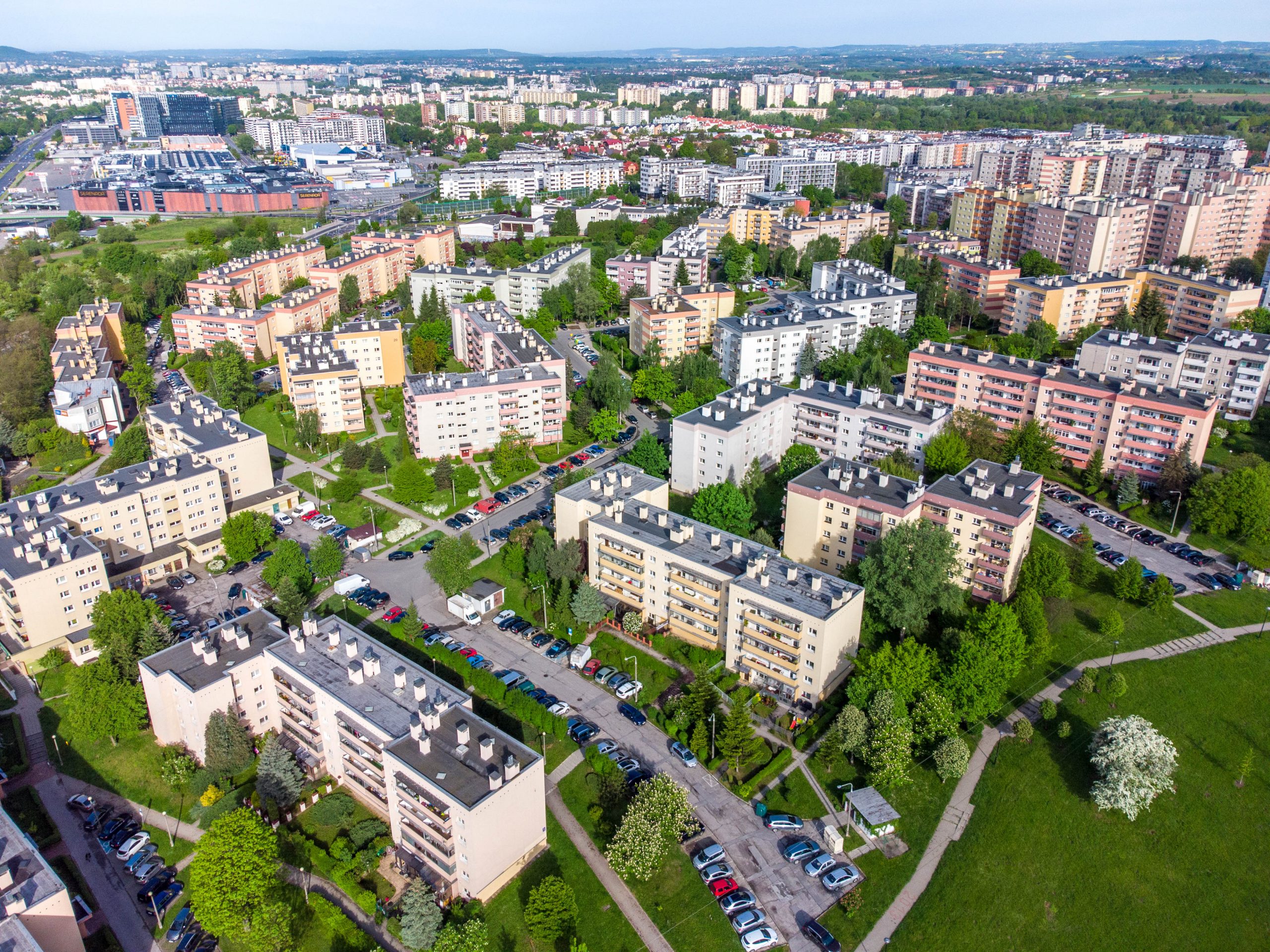
The Housing Cooperative “Oświecenia” in Krakow was established on June 24, 1982. It is an association of members living in the resources of the Cooperative for whom it provides services in the field of housing resources management.
The Cooperative strives to meet the needs and expectations of the residents, co-owners of the Cooperative, who understand that through joint action and resignation from immediate individual benefits, the benefits and profits for each of its members are much greater than if they were to pursue their goals separately.
Housing Cooperative of Oświecenia Kraków, implemented the age management strategy as part of the Project “HR Leader – managing a multigenerational team”. Employees, and management took part in a series of comprehensive trainings increasing their competences in the field of communication between employees of different ages and clients of different ages.
Basic Information
| Name of Organization: | Spółdzielnia Mieszkaniowa Oświecenia w Krakowie |
|---|---|
| Company Size: | < 50 in Poland |
| Location: | Krakow, Poland |
| Industry: | Real estate – housing cooperative |
| Form of the Entity: | Housing Association |
Work Story
The originator of the project “HR Leader – managing a multigenerational team” was the President of the Management Board. He wanted to transfer his competences, observations and know-how resulting from his experience in working in a corporation to a housing cooperative.
An important issue of a managerial nature is the issue of succession and age management. A new generation of employees must be prepared for work. At the same time, you cannot afford to lose older employees who have very extensive experience and competences.
The project “HR Leader – managing a multigenerational team” was aimed at solving customer problems by improving internal and external intergenerational communication and improving the service of residents representing people of very different ages. Thus, the aim of Module I was to ensure the coherence of intergenerational communication, and the aim of Module II was to improve the competencies needed to service customers of various ages (first of all, the so-called difficult customers). Thanks to this, it is possible to minimise risks, avoid tensions and crises, as well as mitigate and resolve emerging conflicts. This requires an understanding of psychological processes and learning the behaviour and problem-solving skills at the social engineering level.
The project was implemented by Małopolska Regional Development Agency in Krakow. The first stage was the identification and analysis of training needs, which included, among others, 2-hour interviews with managers in the cooperative. Then, training began. Last stage was the evaluation of the entire project. From February to April 2022, exercises in the form of case studies were also developed, describing how to behave in a given situation of contact with clients of different ages. As a consequence, this is to lead to the development of an Age Management Strategy.
Useful Insights
If we want to implement the Age Management Strategy, thoughtful educational activities are needed. We need to learn how employees of all ages should approach customer service of all ages. You need empathy and an understanding of psychological processes. Good intergenerational communication improves customer service and reduces the number of complaints on this topic. Only teaching all employees (of different ages) how to communicate with customers of different ages can increase mutual understanding.
Ideas for Reflection
We have to consider:
- How to improve intergenerational communication in the area of customer service?
- How to increase mutual understanding between employees of different ages and customers of different ages?
What actions to take to prepare the organisation for the implementation of the Age Management Strategy?
Keywords
succession and age management, employee market, trainings, intergenerational communication


 AGEADAPT project has been funded by the European Union, with the reference number 2021-1-DE02-KA220-ADU-000033518. Views and opinions expressed are however those of the author(s) only and do not necessarily reflect those of the European Union or the European Education and Culture Executive Agency (EACEA). Neither the European Union nor EACEA can be held responsible for them.